Hilltop Tales and Hidden Crafts in Spain’s Artisanal Villages
November 16, 2025
“Walk past ancient castle walls into cobbled lanes where artisans at their pottery wheels, looms and workshops keep centuries‑old craft alive, giving life and soul to this timeless Spanish hill‑top village.”
Updated March 29, 2026
Estimated Reading Time: 12~14 min
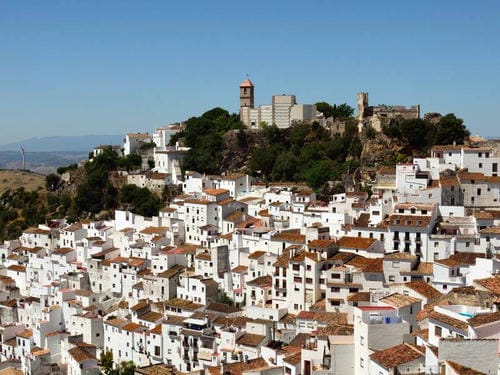
As you ascend the narrow winding road toward the hill-top citadel, you feel as if you’ve stepped out of time. Atop a weathered rise stands the castle, its stone battlements still guarding the village beneath in silent vigil. Below the ramparts, white-washed houses cling to the hillside, façades shimmering in the golden afternoon light. Around them, cobbled lanes twist and tumble down toward the valley, and in those lanes lie the true heart of this place: the workshops of artisans whose craft has quietly endured generations.
In many of Spain’s hill-top hamlets, such villages once grew around medieval strongholds. The presence of the castle signified strategic importance, but also a settlement of artisans and farmers, servants of the fortress and stewards of the land. For example, guides to Spain’s scenic small towns remark on the enduring allure of such places, where geometry of the built environment meets centuries of human endeavour.
Wandering through the village streets, you might pass a carved wooden sign above a shuttered door, or a splash of colour on a ceramic tile set into a wall. Stop yourself there. Inside is likely a workshop where someone shapes forms out of clay, weaves grasses into baskets, or hammers metal into decorative motifs. While the guidebooks seldom focus solely on these quiet creators, their role remains vital — from the hand-turned pottery of a region to the gleaming inlaid steel of a sword-smith’s blade.
The Village Beyond the Castle Walls
Here, you are drawn into a microcosm: the village that grew beneath the castle, the craft traditions that sustained it, and the subtle tensions of modern life. The castle itself may now receive visitors who pause for a view over the rooftops, but the artisans — often unobtrusive — continue weaving the threads of local identity. You may overhear the hum of a pottery wheel, the scrape of sandpaper on wood, or the gentle chime of a hammered spoon. These are not tourist spectacles but working livelihoods.
In this village, the landscape frames the life horizontally — terraced orchards, stone walls, olive groves — while the hill-top fortress marks the vertical ambition of defence and prestige. But the craft workshops anchor the place socially: they provide income, keep young people somewhat connected to their roots, and maintain continuity. One travel-craft essay explained that Spain’s artisan scene is not simply nostalgia: “young artisans creating new, design-led interpretations of age-old skills.”
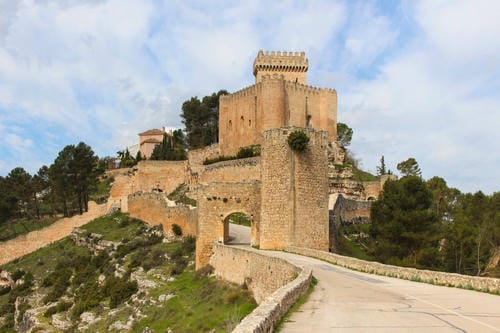
Part of the charm lies in this layering: the ancient castle, the village of houses, and the craft that still happens in hidden corners. As you stroll past a tiny courtyard where clay pots are stacked to dry in the sun, you might imagine the generations who have done the same. And while the mainstream tourism world may have passed this village by, precisely that gives you the opportunity to observe something more intact.
Craft, Continuity and Change
Craft in Spain is a story of juxtaposition — deep-rooted tradition confronted with global change, of local materials meeting new aesthetics, of villages once self-sufficient now looking outward. In our hilltop village the thread is visible: a local potter continues to use a kiln built decades ago; a weaver still spins wool on a hand loom; a metal-worker adapts old hammering techniques to create stylish home décor. Their survival depends on ingenuity, on connecting to visitors or online markets, and on preserving authenticity without being museum pieces.
Spain’s national tourism site emphasises how “towns and cities all over the country are characterised by a particular type of handicraft” and lists ceramics, lace, woven fabrics and glass as staples across regions. Elsewhere, an in-depth article described how “the Industrial Revolution came late to Spain, meaning that traditional crafts survived longer than in many other European countries.”
In our hilltop hamlet craft is both heritage and promise. You may encounter a family workshop where the father still carves wood by hand, while the daughter experiments with contemporary forms. Their product line may span from regional tourist gifts to export pieces that appeal to interior designers in far-off cities — bridging local tradition with global demand. The delicate balance is telling: to preserve authenticity while meeting new expectations.
Walking into one of these workshops, you’ll sense the layered rhythms: morning light through a small window floods the clay-dusty floor; mid-afternoon you hear steady tapping of chisels; by evening a soft hush as the furnace is stoked one more time. Outside, the village life continues: neighbours greet one another, children pause on steps, the sun dips behind the castle. Craft is woven into the social fabric.
For the traveller who chooses to linger, the reward is not simply a souvenir but a story: the potter who sources local clay from a hillside quarry, the leather-worker who still stamps his goods by hand, the basket weaver who harvests rushes from the marsh. These stories amplify the place beyond the usual postcard. They give context to the castle, the hillside village, and the vista.
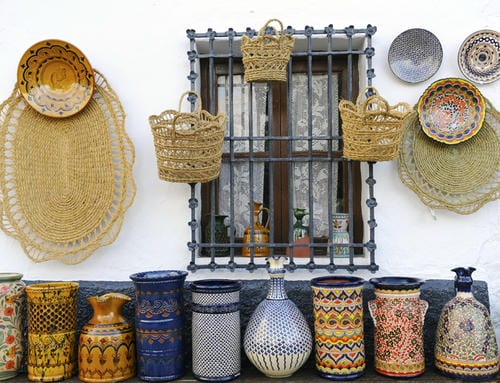
(Image from Andalucia.com, the copyright belongs to the original author)
The Castle and the Maker
And of course, the castle remains. From its lookout you see the village roof-scape, olive groves, distant ridges. It dominates visually — but below it, craft lives. The juxtaposition is telling: the fortress built for defence, the village built for life, the workshops built for expression. The traveller who engages with craft sometimes realises that the “real” monument here may not be the stone walls of the castle, but the intangible heritage of making.
In practical terms: look for the little chapel-like lanes where windows display workshop tools — a spinning wheel, a loom, hammered trays. Enter politely. Ask about the craft. The artisan may show you a process, a tool, a piece-in-construction. Buying something small supports continuity. Photographing respectfully (with permission) honors the craft. And simply asking about what is made here — what clay, what technique, how many hours — lends dignity to the endeavour.
If you visit during an artisan market or festival you may witness demonstration-workshops, live crafting, and perhaps even the story behind a region’s signature object — whether it’s the blue-white ceramics of a town, the damascene steel of another, or the basket-weaving of yet another.
In a way, the village beneath the castle becomes a living museum of craft — not static, not just for show, but functioning. For travelers seeking more than just views, this is the kind of place where you pause, breathe the quiet, talk to someone making things, observe the arc of the hammer, the spin of the wheel, the glaze of the clay.
One final nuance: craft helps anchor the village socially. In many rural hilltop settlements across Spain the younger generations have left for cities. But a revived interest in local heritage, in slow design, in authentic experience means some artisans are staying (or returning) and building micro-businesses. The traveller’s interest, however modest, becomes part of the ecosystem of sustainability.References
(All content on this blog represents the personal experiences and opinions of the author. While every effort is made to provide accurate and up-to-date information, travel conditions, laws, and regulations may change. Readers should verify details before making travel decisions.)
About the Author:
Marina Delgado is a certified travel consultant and wellness retreat curator. She writes detailed destination guides that balance outdoor adventure with restorative experiences.
Reference:
https://fernwayer.com/journal/spain-handmade-crafts
https://carameltrail.com/spain-in-10-objects-celebrate-spanish-craftsmanship-and-culture
https://www.thegeographicalcure.com/post/secret-towns-in-spain