Istanbul’s Secret Passage of Hand-Made Ceramics
November 19, 2025
(Image from Mindtrip, the copyright belongs to the original author)
Estimated Reading Time: 13~15 min
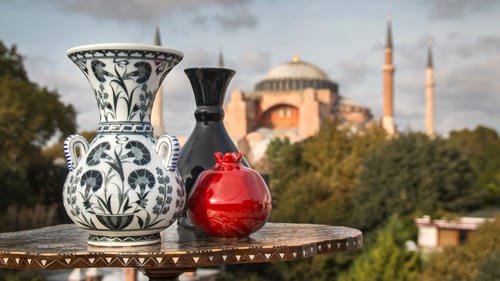
In the heart of Istanbul — away from the tourist-packed domes of the Hagia Sophia and the throngs of the Grand Bazaar — lies a quiet enclave where artisanal clay and glaze rule. In this tucked-away quarter, you’ll walk past door after door, each of them leading into a pottery workshop rather than a café or souvenir stall. It’s a place where the rhythmic turning of wheels, the tap-tap of sculpting tools, the rich fragrance of damp clay and kiln-fired glaze atmosphere have faded far less into the background than the city’s bright tourist lights. It might not yet be the “official name” on the map, but it feels like Istanbul’s best-kept secret: a neighborhood that lives and breathes ceramics.
From Ottoman Tiles to Studio Doors: Tracing the Quarter’s Ceramic Roots
When you consider Istanbul’s ceramic legacy, you probably think of majestic tile-covered mosques, the deep cobalt blues and emerald greens of the Iznik ware tiles that once adorned palaces and imperial domes. Indeed, Iznik pottery, produced from the late 15th to the end of the 17th century, is one of the hallmarks of Ottoman craftsmanship — characterised by a frit-ware body and underglaze painting in cobalt, turquoise, green and bole red.
But what’s less obvious is how this high-end, palace-commissioned craft seeded a more humble, living network of artisans and studios in the city itself. Over time, the techniques and the spirit of ceramic craftsmanship filtered down. The quarter we’re talking about today occupies one of Istanbul’s older districts, where small workshops proliferated in the 19th and early 20th century, often tucked into courtyards, alleyways and former workshops of other trades. As one guide to Istanbul’s ceramics explains: “Today Istanbul continues to be a meeting point for both traditional and modern ceramic artists, with ceramic workshops and galleries showcasing the works of local and international artists alike.” [1]
One example is the studio-gallery of TESTI Quartz in Sultanahmet, which champions a seven-generation family legacy reviving Ottoman tile-making in a boutique showroom and workshop setting. It offers hands-on ceramic experiences for visitors – a clear link between heritage and everyday craft.
The result is this hidden quarter: a network of narrow lanes where doorways bloom into workshops, glazing rooms, display areas stacked with freshly fired vases, plates and tiles — and where the visitor feels more like a guest passing into a craft enclave than simply another shopper.
Strolling Through the Quarter: What to See, What to Try, and Why It Works
Walk down one of the quieter suited lanes just off the main tourist arteries of the historic peninsula, and you’ll notice the difference. Instead of fashion boutiques or carpet sellers, you’ll see plain doorways marked simply with a name and “Atölye & Seramik” (Workshop & Ceramics). You’ll hear the low hum of a kiln in one doorway, the spinning potter’s wheel in another. In one, someone is painting a tile; in another, an apprentice is shaping a bowl.
Many of the commercial “workshops” advertised for tourists are in fact set up for that purpose, e.g., a 45-minute “Pottery Workshop Class” in Cağaloğlu inviting visitors to mould clay with an instructor. [2] But what makes this particular quarter special is that many of the studios are real local craft-spaces, not simply tourist façades.
Here’s what to pay attention to as you wander:
Workshop doors: Many are modest on the street but alive on the inside with raw clay, splash marks, glazed trays cooling, stacks of “bisque” ware waiting to be fired.
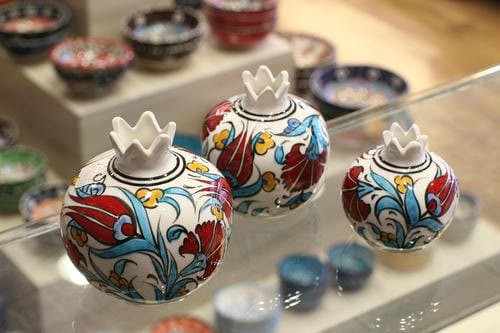
Display windows: Often you’ll see the finished pieces — plates with tulip motifs, bowls in muted ochres and cobalt, tall vases — giving a preview of what’s coming out of that doorway.
Artisan interaction: Step inside if you’re allowed; many studios will show you their process or let you watch the wheel turn, the glaze brush sweep a surface.
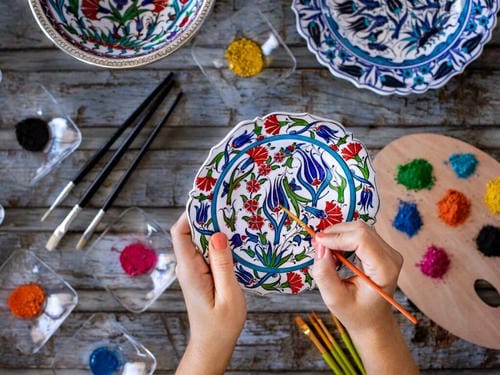
Hands-on options: If you have time (and you should), sign up for a workshop in situ — paint your own tile, spin a small bowl, even just watch the moulding stage.
Souvenir with authenticity: Instead of mass-market trinkets, you can pick up something made on the spot or commissioned locally — a meaningful piece that links you to the place and the craft.
What makes this quarter work is that it hasn’t been entirely overtaken by souvenirs or mass tourism. It retains a sense of craft in situ. In the broader historic peninsula of Istanbul, many neighborhoods are saturated with stalls, but this one retains a quieter, slower rhythm. That’s why the feeling is different — you’re walking into making not just buying.
Tips for Your Visit: Timing, Navigation and What to Bring
If you’re planning to explore this pottery-quartier during your trip to Istanbul, here are some practical tips — treating it like a mini adventure off the beaten path.
When to go: The best time is mid-morning, when the studios have opened after their kiln cooldown or wheel cleaning. Late afternoons are fine too, but some small ateliers may close early or trim hours.
How to get there: Choose a base in the historic peninsula (Fatih district) for convenience. From the tram stops near Sultanahmet or Cağaloğlu, walk away from the major monuments into the smaller lanes. The quarter is tucked away enough to feel quiet yet close to transport.
What to wear/bring: The studios are hands-on environments — if you plan to join a workshop, wear clothes you don’t mind getting splashed with a bit of clay! Bring a small tote or bag for your purchases; delicate ceramics may need some extra wrapping if you’ll transport them. If you’re buying, ask about shipping or packaging if you’re heading onward.
Workshop etiquette: Many of the ateliers welcome visitors casually; others may ask for a reservation. If you’re going to make something, it’s best to call ahead or book online (several studios offer 1-2 hour beginner sessions). Expect to receive guidance, to mould or paint something your own hands produce, and to leave with a memory rather than simply a product. Some classes include tea or coffee while you work.
Don’t stay just inside the studio. Step out into the surrounding lanes: you’ll find the patina of old workshops, storefronts with fewer visitors, glimpses of kiln chimneys and ceramic shards, and small artisan neighborhoods that still plug into Istanbul’s long heritage of craft. One travel guide mentions how in the Galata/Karaköy area, you’ll find a myriad of carefully curated ceramics from traditional designs to contemporary interpretations.
Unless you’re simply passing by, spend at least an hour or two meandering. You might begin at a known studio workshop, then drift into adjacent alleyways, pop into studios you weren’t expecting, ask to look at finished pieces, or even chat with an artisan about how they learned their craft.
Visiting this hidden pottery quarter in Istanbul offers more than just another sightseeing stop. It invites you into a living tradition, into the quiet world of material transformation — clay into form, glaze into colour, artisan into maker. In a city full of loud monuments and crowded markets, this is where you slow down, step through a door, and watch centuries-old hands at work.
(This blog reflects the author’s perspective and interpretation of different cultures and locations. Readers are encouraged to respect local customs and conduct further research to gain a full understanding.)
About the Author:
Noah Griffith is an adventure guide certified in wilderness survival and expedition planning. He focuses on outdoor travel, trekking routes, and responsible exploration.
Sources:
[1]: https://moca-ny.org/2024/07/16/48-hours-in-istanbul-turkey
[2]: https://www.getyourguide.com/istanbul-l56/full-day-licenced-guide-at-disposal-in-kusadasi-t447053