Under the Highland Moon on a Nocturnal Owl Safari in Scotland
November 17, 2025
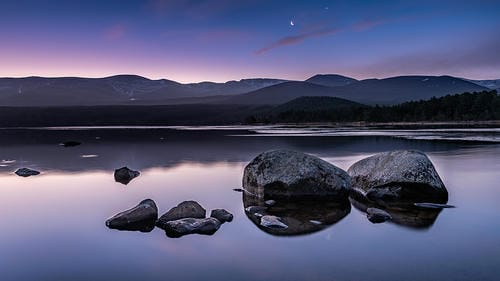
(Image from Live Breathe Scotland, the copyright belongs to the original author)
Estimated Reading Time: 13~15 min
From the deep glens to the rolling moorlands of the Scottish Highlands, a hush falls after sunset. In that quiet darkness, the world shifts: moonlight glints off loch waters, mist curls around ancient pines, and the air is filled with unseen life. For travelers seeking something different, nothing captures the wild mystery of the Highlands quite like a night-time owl hunt — a guided adventure to seek out Scotland’s most elusive nocturnal raptors.
The Enchantment of Owls in the Scottish Highlands
When night falls in the Highlands, owls emerge as spectral guardians of the landscape. Scotland is home to several owl species — including the tawny owl, barn owl, long-eared owl, and short-eared owl — each with its own habits and preferred terrain.
One of the most common nocturnal calls you’ll hear in the Highlands belongs to the tawny owl (Strix aluco), a stocky, medium-sized owl with a rounded head and a plumage that blends red-brown or grey tones. Highly territorial and widespread across mainland Scotland, the tawny owl is well adapted to woodland habitats. During night-time excursions, you may hear its signature hoot — a drawn-out “hooo … hu-huhuhooo” — or the softer contact call of females, sometimes called “keewik.”
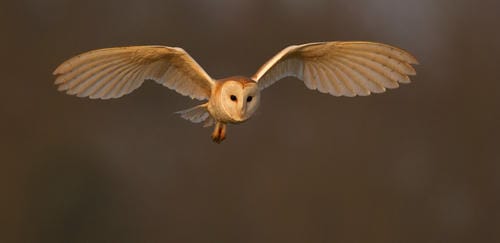
Another frequent presence is the barn owl (Tyto alba), whose ghost-like appearance and haunting screech have earned it several nicknames — “screech owl,” “ghost owl,” even “demon owl” in folklore. With its heart-shaped face and pale underparts, the barn owl is exquisitely designed for hunting small mammals like voles in open fields. Their hearing is so acute that they can locate prey by sound alone, aided by a silent flight that seems almost supernatural.
Less commonly encountered, but equally fascinating, are long-eared owls (Asio otus). These secretive birds with prominent feather tufts spend much of their time in forested areas, gliding soundlessly as they search for prey. Their calls are soft and distant — a mellow “hoo” that carries through the woods if you’re lucky. Then there’s the short-eared owl, more active in open moorlands and grassland. Despite being nocturnal, like many owls, they are also diurnal and may hunt during daylight hours.
Such variety is part of what makes a night-time owl hunt in the Highlands so magical: you never quite know which species you might hear, or even glimpse — the woods hum with possibility.
Embarking on Your Night Owl Safari
A night-time owl-hunting tour in the Highlands is more than just birdwatching — it's an immersive experience in wilderness, sound, and stillness. Guides who specialize in nocturnal wildlife bring the expertise and patience needed to find these elusive raptors, navigating through darkness while balancing respect for the owls and their environment.
As twilight deepens and the stars begin to emerge, your guide may lead you to a wooded glen, a moorland edge, or a hidden loch shore. In some areas, the terrain is rugged and damp; thermals and waterproof layers are essential. A good headlamp is helpful (with a red filter, ideally, so as not to disturb the owls), but often the most important tool is your ears. During the first hour of the tour, much of the action happens by sound — the slow, deliberate hoots; the rustle of wings; the whisper of flight.
You may hear tawny owl hoots echoing from tree cavities or old nest boxes. Occasionally, a barn owl may quarter quietly over rough grassland, its ghostly silhouette almost too subtle to see, but its presence unmistakable when its piercing screech pierces the night. Long-eared owls, when present, can be especially shy, often heard more than seen as they glide through the shadowy branches.

The guide may also share stories of owl behavior: how tawny owls form long-term territorial pairs, sometimes nesting in tree holes or old corvid nests. Or how barn owls adapt to farmland terrains, hunting within a large radius of their nesting site, often near barns, grasslands, or rough field margins. You might learn how some owls rely on their asymmetrical ears and specialized facial discs to locate prey in pitch darkness.
Because it can be difficult to spot the owls visually — their camouflage is masterful, and night vision is limited — your guide may supplement the experience with playback of calls (used ethically) or show you evidence of owl activity, like pellets or feathers. These tangible signs connect you to the hidden life of these nocturnal hunters.
A key part of the adventure is respecting the owls’ space. Tours are typically conducted with a low-impact approach to minimize disturbance — no bright lights or loud noises. The goal is to listen, observe, and appreciate. In many cases, you may remain stationary in a single spot, letting the forest settle around you as you wait quietly. Patience, as in all wildlife encounters, is rewarded.
As the tour progresses, your senses sharpen: you catch the gentle rustle of wings, the soft whisper of wind through heather, the rhythmic call of a distant owl. Occasionally, a silhouette drifts overhead or perches briefly on a branch, framed by moonlight. If conditions are just right, you might glimpse a snowy owl in winter, though they are rare visitors to Scotland. These moments linger. They feel intimate and profound — like a secret shared between you and the Highlands.
(All content on this blog represents the personal experiences and opinions of the author. While every effort is made to provide accurate and up-to-date information, travel conditions, laws, and regulations may change. Readers should verify details before making travel decisions.)
About the Author:
Lana Petrovic is a destination strategist and travel blogger with a focus on city breaks and urban exploration. Her guides cover architecture, local culture, and hidden city gems.
Reference:
https://www.scottishraptorstudygroup.org/raptors/tawny-owl