Beyond the Trails: Discovering Slovenia’s Hidden Rock-Climbing Crags
November 15, 2025
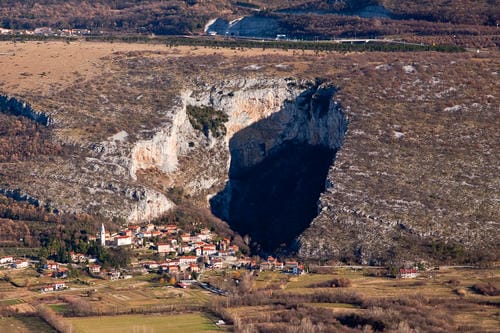
(Image from Slotrip.si, the copyright belongs to the original author)
Estimated Reading Time: 13~15 min
When most people hear “Slovenia,” visions of the dramatic peaks of Triglav, verdant alpine meadows, shimmering lakes and winding hiking trails come to mind. Yet tucked into this compact country’s rugged landscapes is another side of its vertical terrain — one that invites climbers to pull on chalked hands, tie into ropes, and scale limestone walls rather than simply stroll over ridges. Enter the world of Slovenia’s rock-climbing crags, the steeper, less-trodden faces of its mountains where adventure and adrenaline quietly wait.
The Unexpected Side of Slovenian Mountains
Slovenia’s rock-climbing scene may not be as famed as the alpine summits — but it offers something different. Here the mountains aren’t necessarily made for hiking. They beckon via metal bolts and fixed anchors, steep overhangs and multi-pitch walls rising from forest clearings or coastal bluffs. In places like the southwest – near the tiny village of Osp and the soaring amphitheatre of Mišja Peč – climbers from across Europe converge on limestone faces, drawn by world-class quality and well-protected routes. According to a recent overview, “rock climbing around Osp is the most popular area within Slovenia … stand-out crags include Misja Pec and Crni Kal.” [1] Meanwhile, coastal-region guides describe the highest-volume crags as Osp, Mišja Peč and Črni Kal. [2]
The appeal is multi-fold. Many of these crags enjoy favourable rock quality, good infrastructure, and relatively mild access compared with high-alpine routes. The seasons also differ from standard mountain hikes: for example, in the coast-region of Slovenia climbing is best in spring (March–May) or autumn (September–November) rather than the high summer heat. [2] What this means is that for a visitor who might expect to walk scenic trails, Slovenia can surprise you: the mountains still beckon, but via a different path – up the rock face rather than along it.
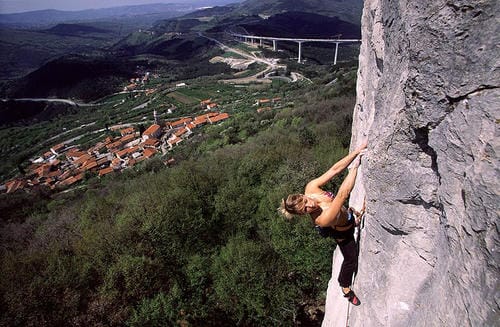
From your arrival to the approach, the rhythm shifts. At a place like Osp, the limestone wall looms above the old village, the crag’s routes ranging from gentle face climbs to dramatic steep overhangs up to 140 m high. [1] It’s a stark contrast to the scenic strolls over alpine ridges. You’re no longer simply absorbing panoramic vistas from a trail; you’re engaged in a vertical dance, feeling the micro-texture of the rock, hunting holds and footholds where the mountain yields to your hands.
To make the most of Slovenia’s climbing crags, it helps to consider where you’ll go, your skill level, and what time of year you plan to visit. A few regions stand out, offering different characters and access.
Coastal & Karst Region (Osp, Mišja Peč, Črni Kal)
This region in southwest Slovenia (close to the Italian border) is arguably the heart of sport climbing in Slovenia. Osp is described as “undisputed centre of Slovenian climbing, attracting climbers from all over the world.” [1] Here the limestone is superb, many routes are well-bolted, and there is a wide range of grades and route lengths. A visitor staying in Osp or nearby can nearly walk to the crags, mix climbing with seaside stays or Italian-border day trips.
Seasonality matters. The coastal region is best in spring and autumn; summer can be too hot on sunny walls, and winter may be too cold or damp. [2] Accommodation is available in small villages, and the blend of climbing plus seacoast culture makes this region particularly appealing for travellers looking to combine sport climbing with leisure. The vibrant limestone amphitheatre of Mišja Peč is nearby and widely regarded as one of Slovenia’s premiere climbing walls.
Inland & Alpine-Fringe Regions (Bled & Bohinj, Celje, Vipava Valley)
If you’re already travelling in the alpine zones of Slovenia, or wish to combine climbing with hiking, biking or lakeside relaxation, consider the crags around the lake region of Bled and Bohinj, or the forested crags near Celje. For example, in the Bled area there are 14 crags and over 560 sport routes. [1] The Vipava Valley offers sunny southwest-facing walls that cater to beginners through to advanced climbers. [3]
Safety Equipment, Inspections, and Rock Awareness
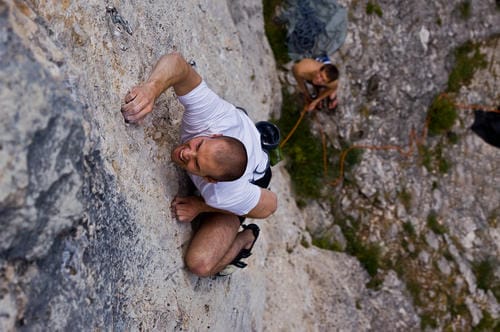
When planning a climbing trip on the limestone cliffs of Slovenia, be sure to prepare accordingly based on your experience level and the demands of outdoor rock climbing. Unlike paved hiking trails where the main risks are fatigue or weather changes, sport climbing or multi-pitch climbing involves a wider range of risks: safe anchor points, the risk of falling rocks, proper belaying techniques, coordination with your climbing partner, and the feeling of being exposed. For destinations like Slovenia with diverse climbing terrain, this means careful consideration of route selection, season, guiding services, equipment, and mindset.
Assess Your Climbing Level and Choose the Right Route
Before you set off, honestly assess: How much outdoor climbing experience do you have? Have you done lead climbing, used quickdraws outdoors, managed belay stations and rope systems outside of indoor climbing gyms, and climbed actual rock faces (not just indoor climbing walls)? Many climbing safety guidelines emphasize that in unfamiliar terrain, you should assess your abilities and avoid over-risking.
After choosing a route suitable for your skill level, be sure to prepare your equipment thoroughly and maintain a high level of awareness and vigilance. Outdoor rock climbing involves risks such as falling rocks, weather changes, worn anchor points, fatigue, and difficulties in accessing and exiting the route. For example, guidelines for Alpine zip climbing routes emphasize "meticulous planning," "choosing a destination based on your ability," "using complete and standard-compliant equipment," and "no climbing in thunderstorms." When sport climbing in Slovenia, ensure your equipment is in good condition (hook, rope, quickdraw, helmet), have it checked by your partner, and confirm the route's condition and accessibility.
Climbing in a climbing paradise like Slovenia also means being responsible for the local environment and customs. Climbing areas typically have corresponding regional regulations: seasonal closures (e.g., to protect bird nesting areas or protected areas), designated climbing routes, and access agreements with landowners. As a visiting climber, it is crucial to respect climbing etiquette and local customs.
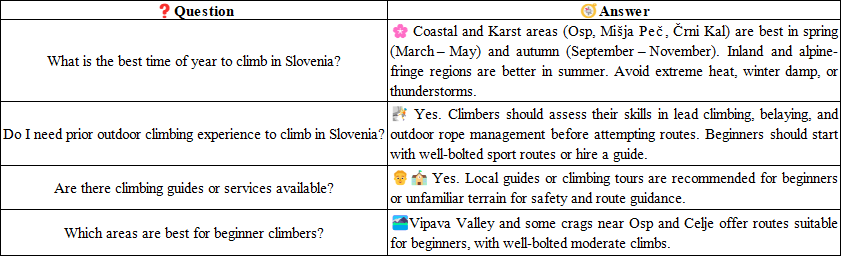
COMMON Q&A:
About the Author
Marcus Liu. A former tour operator and adventure guide, Marcus specializes in off-the-beaten-path itineraries. He has led expeditions across Asia, Europe, and South America, blending safety expertise with cultural immersion tips.
Sources:
[1]: https://climb-europe.com/pages/rock-climbing-slovenia
[2]: https://www.slotrips.si/en/rock-climbing-in-slovenia
[3]: https://sloveniahiking.rocks/en/climbing/vipava
Don’t let the journey end here! Our blog is packed with hidden gems, insider tips, and unforgettable experiences. Take a few more minutes to explore—you might just discover your next favorite destination.