Melodies in the Pedestrian Zone: Uncovering Ljubljana’s Street Musicians
November 20, 2025
“Walk through Prešeren Square or Čopova Street and you’ll hear violinists, guitarists and gentle melodies weaving into everyday life.”
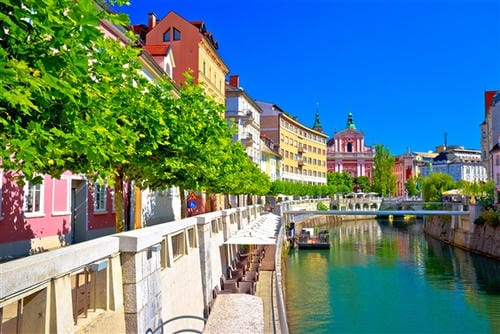
(Image from Tripadvisor, the copyright belongs to the original author)
Estimated Reading Time: 14~16 min
Wandering through the heart of Ljubljana, Slovenia, one might expect the typical hustle and chatter of a tourist-friendly European city. But hidden amid the cobblestones and pastel façades is something quieter, though no less alive: the slow-moving rhythm of street musicians who play without amplification, blending into the city’s pulse rather than dominating it. These artists, often overlooked by hurried visitors, offer something remarkable: a version of busking that respects public space, invites listening rather than distraction, and casts a softer acoustic light on a capital that prides itself on pedestrian zones.
In the pedestrianised zones of Ljubljana, street music has developed into a subtle art form. According to a local sound-scape project, live street musicians joined by the quieter ambience of cafés and ambient background sound began to stand out after many traffic roads were transformed into pedestrian areas post-2009. What you might spot are solo instrumentalists or small ensembles tucked beneath Archestrian arches or in side streets off the main squares. They don’t blast their presence; rather, they invite it. They respond to the city’s tempo and its daily transitions: the morning calm, the afternoon stroll, the early evening when cafés open their windows.
The Quiet Musicians of Ljubljana
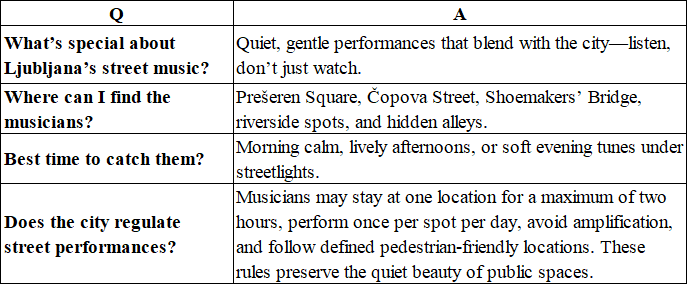
In places like Prešeren Square and the pedestrian thoroughfare of Čopova Street, you’ll find musicians performing in context rather than as focal points. One recorded sound-walk along Čopova Street found that ambient restaurant speakers, café chatter and street music sometimes intermixed, creating a layered sound environment. The effect is almost paradoxical: we call them “silent” musicians not because they play inaudibly, but because they maintain a respectful voice within the acoustic ecosystem of the city. You won’t always hear them from several blocks away; instead they get close to you, quietly, as a companion to your walk rather than the reason you came.
For a traveller with time to pause, these performances reward attention. A violinist might be perched on the steps of an old town church; a guitarist picking out chords by the riverside seat; an accordionist filling a quiet alley with a soft melody. Many of these performances persist year‐round, though the midday pedestrian surge and evening café crowds in summer amplify their effect. According to the municipality of Ljubljana, makeshift street performances are welcomed—as long as they’re “pleasant and unobtrusive” and comply with rules designed to preserve the quality of life in the old town.
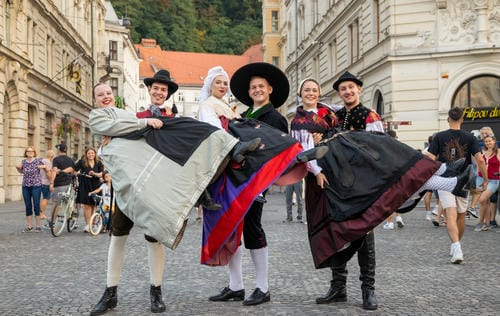
For the visitor it means a slightly different kind of experience: one in which you listen as much to your surroundings as to the performer; one where stopping for a few minutes feels natural, not like pausing a busy soundtrack. It invites us to slow down, to lean into the melody rather than step around it.
A Listening Walk Through the Cityscape
Begin your exploration of Ljubljana’s silent street musicians with a morning stroll through the old town. In early hours—when the cafés are setting out tables and the Ljubljanica river mirrors the sky—you’ll notice fewer performers, which enhances the quietness of one solo flute by the riverside or a gentle acoustic guitar on a side street. The pedestrianised core of the city provides an ideal backdrop for subtle sound. According to acoustic research, areas along the river and older pedestrian zones have become quieter in traffic terms, allowing non-vehicular sound to be more clearly heard. [1]
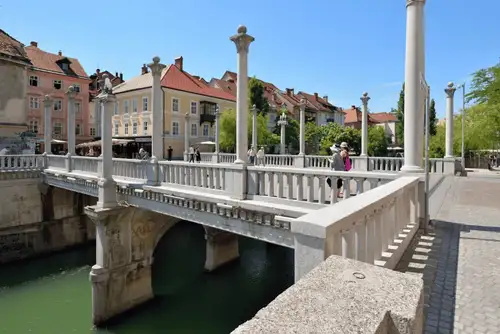
By late morning or early afternoon the city’s tempo rises. You’ll find designated spots where street performance is formally permitted by the city, such as on the platform at Figovec, the embankment at the Hribar monument, the underpass near the Museum of Modern Art, or on Shoemakers’ Bridge (Čevljarski most). At these spots, the rule of thumb is modest: play, but don’t dominate. Stick to a two-hour maximum at any one location; no amplifiers; respect the flow of people. These guidelines aren’t just for the performers—they shape the atmosphere for listeners too, contributing to a soundscape where the music is gentle, alive, present but not intrusive.
As you wander, pause at a bend in the river or sit on a bench in Miklošič Park, and you might hear the hum of the city beneath the music—the murmur of conversation, the ripple of water, the flutter of leaves overhead. The musician becomes part of that tapestry. The “quietness” of these performances invites you to be still for a moment—to tune in rather than just pass by.
Evening opens another dimension. Between 20:00 and 22:00 in summer months, these same zones come to life again—but in a quieter way: a saxophone by the embankment, a small trio humming a folk tune under ambient street-lights. The city regulations reflect this: permission for performances runs into the evening, but emphasizes non-amplified, considerate presence.
Why They Matter and What They Reveal?
At first glance, street musicians may seem incidental to a city break—a pleasant bonus rather than a must-see. But in Ljubljana they matter in a deeper way. The sound studies conducted in the city show that street music is part of how residents and visitors perceive urban life and identity. One study described street music in Ljubljana as “cultural capital” and even as a “survival strategy” for musicians. When you pause and listen, you become part of a dialogue between performer, space and city.
The silent street musicians of Ljubljana can illustrate several richer themes beyond simply “look at the music”. They show how a city can shape public space to favour human scale, how pedestrians can reclaim the thoroughfares from traffic, how sound and silence cohabit in an urban environment. They show how regulation—time limits, acoustic limits, location constraints—can in fact help create moments of quiet beauty rather than suppress spontaneity. The official rules for busking in the city are thoughtful rather than heavy-handed: performers may stay at one location for a maximum of two hours and must relocate afterward; they may play only once per spot per day; amplification is discouraged; spaces are defined.
You don’t rush. You don’t push through a square, you linger. You listen. A guitar plucked softly, a flute in a side alley, a voice raised in an old town courtyard—they may not catch your attention with high volume or spectacle, but they reward you with subtlety. And in a city that encourages quiet pedestrian moments and discourages overt noise, these musical interludes reflect local values: respect, presence, community.
Ultimately, encountering a silent street musician in Ljubljana is not just about hearing a song—it’s about experiencing a city’s acoustic soul. The notes linger, but so does the space between them. And in that space you hear Ljubljana differently.
Q&A
(Travel conditions, visas, entry requirements, and restrictions can change without notice. The author is not responsible for complications arising from changes in travel policies or events beyond their control.)
About the Author:
Harper Quinn is a former international tour guide with a knack for uncovering hidden city gems. She has led cultural excursions across Europe and Asia and now shares insider tips through her vivid travel writing.
Sources:
[1] https://www.cgs.unibe.ch/unibe/portal/fak_historisch/fsuf/cgs/content/e112723/e116086/e362868/e362883/files362885/CitySonicEcologyProjektbeschreibung_ger.pdf
Your journey doesn’t have to stop here! Explore more of our travel guides, tips, and personal stories, and let yourself get lost in the adventure.
Every click brings a new discovery!