Dawn at Sea: Setting Out with the Fishermen of Hokkaido
November 19, 2025
Updated March 27, 2026
Estimated Reading Time: 8~10 min
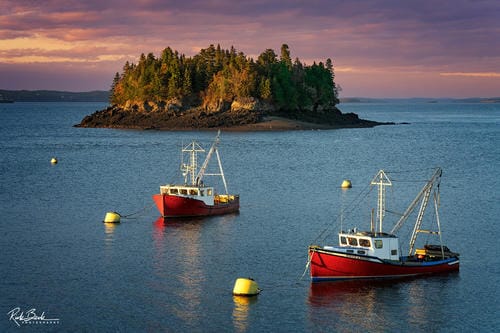
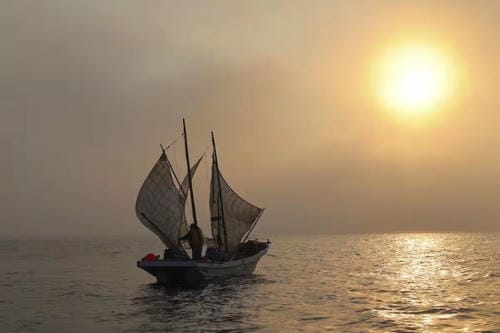
Before sunrise, the air over Hokkaido carries salt and promise. In the faint light you’ll see the silhouettes of small fishing boats slipping out from quiet harbours, heading toward waters that have fed local communities for generations. There’s a calmness to this moment—a subtle shift between night and day, when the sea is still glassy and the only sounds are the rhythmic hum of the motor and the gulls overhead. In this early hour you join the fishermen: seasoned locals whose lives are regulated by tides, seasons and the unpredictable moods of the ocean.
You are not a mere spectator. You step aboard and the vessel cuts across the cold water. The sky begins to pale and the horizon blushes. On the deck you help pull in nets or trap lines, share jokes with the crew, and feel the gentle jolt of the boat as fish are drawn in. The experience grounds you in how these men and women relate to the sea—not as a tourist attraction, but as a daily livelihood.
As dawn light intensifies, the catch is brought aboard. You watch as the nets are emptied: scallops, crab, salmon, sea urchin, depending on the season. There’s a rhythm to it: the haul, the sorting, the splash of seawater, the crates for transport. And then you realise your role shifts—from helper to cook-to-be. The next stage of the journey begins.
The Sea-to-Table Cooking Experience
With the morning catch secured, you join a local kitchen—sometimes the home of a fisherman’s family, sometimes a humble seaside workshop—where you learn to prepare the very seafood that was hauled in only hours ago. In one coastal town, an experience offers exactly that: select your catch in the morning, and by mid-day you’re learning to fillet, season and cook it under the guidance of a fisherman’s wife or local host.
You’ll be shown the techniques of cleaning and slicing fish, or opening scallops and shucking sea urchin, perhaps even grilling king crab over charcoal. One chef in Hokkaido described how, for him, “choosing the right ingredient is the key… you need to know where to find the best ingredients.” In this context you’re not just eating fresh seafood—you’re connecting with how that seafood came to your plate.
The cooking takes place with the sea in view: windows overlook a harbour, the air smells of salt and oak smoke, and as you cook you can hear gulls overhead and waves gently lapping the wharves. The host may show you how to prepare simple miso-broths with freshly caught fish, lightly grilled scallops brushed with soy-butter, or sea urchin wrapped in kombu kelp. In doing so, you learn about seasonality: what shellfish come in winter, what fish dominate summer, how the cold Hokkaido waters influence texture and flavour. For example, one seasonal calendar notes scallops from December to May and hokkai (Northern) shrimp in June–July and again in October–November.
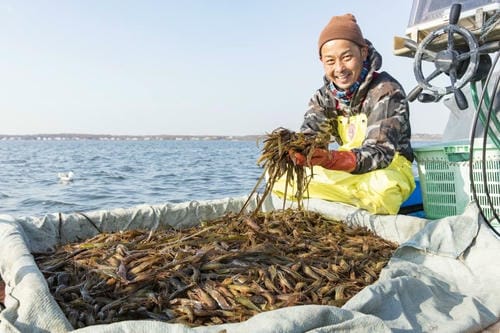
In the midst of preparation you may pause and listen: the quiet conversation of the host explains how the ecosystem works, the importance of preserving fish stocks, and how younger fishermen are innovating in eastern Hokkaido to adapt to environmental change. As you stir, season, and sauté, you sense that this is as much a cultural lesson as it is a cooking one.
Finally, around a simple wooden table, you sit and eat. You taste the catch of the morning—still glistening, still alive in spirit. Flavours are vibrant: the sweet brine of scallop, the firm meat of salmon, the delicate burst of sea urchin. Each dish tells a story: of the sea, the boat, the dawn, the people. To eat it in its place of origin gives that story flesh and blood.
After the meal you linger a little — perhaps you stroll down to the dock again, watch the afternoon shift in the harbour, and reflect on how the sea and its keepers shape community, identity, and sustenance.
Immersing in Culture and Place
Beyond cooking and eating, this trip draws you into the fabric of village life. The fishing towns of Hokkaido — places like Shibetsu or the Notsuke Peninsula — are woven with stories of endurance and adaptation. In Shibetsu, for instance, salmon fishing remains a mainstay and younger generations are working to refresh the tradition even as environmental pressures grow. In coastal villages, aging nets are repaired on docks, small boats bob patiently, and simple wooden homes perch on the edge of cliffs that drop into cold, deep waters.
You may venture into local markets where the morning catch you saw earlier is sorted, sold, and displayed. In places like Hakodate’s Morning Market, nearly 300 vendors set up before dawn, selling scallops, sea urchin, salmon roe, and more. There, you’ll see the full spectrum of Hokkaido’s seafood culture: vibrant kaisendon (seafood rice bowls), grilled shellfish, roe shimmering in small dishes. Visiting these markets gives you a broader perspective on how local people sustain themselves and their traditions.
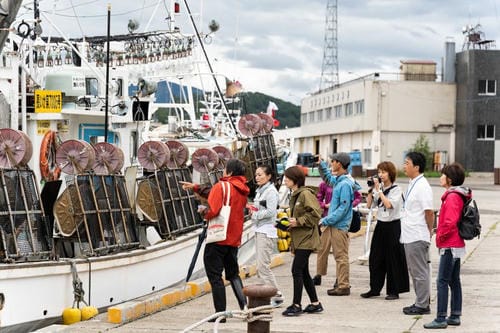
You might also explore other hands-on experiences beyond the cooking class. For example, in Taiki town on the Pacific coast, there are tours where you ride in a fishing boat, learn to fillet an entire salmon, and even make ikura (seasoned salmon roe) from freshly harvested eggs. In Eastern Hokkaido, such as on the Notsuke Peninsula, local guides lead scallop-harvesting tours: you arrive at the port, help to unload the scallops during landing season, shuck them yourself, and enjoy them in a home-style meal.
As you move between boats, kitchens, markets, and homes, you begin to feel the deep roots that fishing has in these communities. You learn about the Shibetsu Salmon Science Museum, which traces the ecology and culture of salmon to help preserve local traditions. You visit coastal towns like Shakotan, where sea urchin (uni) is a cherished catch, and the decline of population and changing industry tugs at local memory. These rich stories add a human dimension to your sea-to-table journey.
Interacting with fishermen, their families, and local guides, you begin to understand that their way of life is more than utility: it's identity. There’s a quiet pride in knowing exactly where food comes from, in protecting it, in sharing it. For you, the traveler, this engagement is transformative. It’s not just a lesson in cooking—it’s a lesson in belonging, in sustainability, in the heart of Hokkaido’s coastal culture.
(Travel conditions, visas, entry requirements, and restrictions can change without notice. The author is not responsible for complications arising from changes in travel policies or events beyond their control.)
About the Author:
Leila Santos is a travel journalist with expertise in adventure destinations and eco‑tourism. Her work has appeared in multiple global outlets, and she has led expeditions across Latin America.
References:
https://www.byfood.com/experiences/seafood-dining-notsuke-peninsula-hokkaido-1495
https://setsuniseko.com/en/blog/sushi-kato-inori