The Flavors of Morocco and the Essence of Tagine Cooking
November 19, 2025

Estimated Reading Time: 13~15 min
Morocco is a country of striking contrasts and rich cultural heritage, where ancient traditions and modern visions intertwine. From the vast dunes of the Sahara and the rugged peaks of the Atlas Mountains to the fertile valleys and the winding coastlines of the Atlantic and Mediterranean, its diverse geography carries a cultural tapestry woven by Berbers, Arabs, sub-Saharan Africans, and Europeans, reflected in every aspect of its language, architecture, cuisine, and belief systems. The medinas, bustling open-air markets, tranquil courtyard houses, and magnificent fortresses of cities like Marrakech and Fez all tell stories of overlapping historical imprints from Roman influences, Islamic civilization, and even the French protectorate era. Each region further reveals its unique charm through its language, clothing, and handicrafts. Just as the aroma of spices wafts from a clay tagine simmering over charcoal, and the rich flavors of various ingredients blend together under the conical lid, this iconic dish metaphorically represents the vibrant story of desert nomads, Arab conquerors, and diverse cultures that have co-written this land.
Origins and Cultural Significance of the Tagine
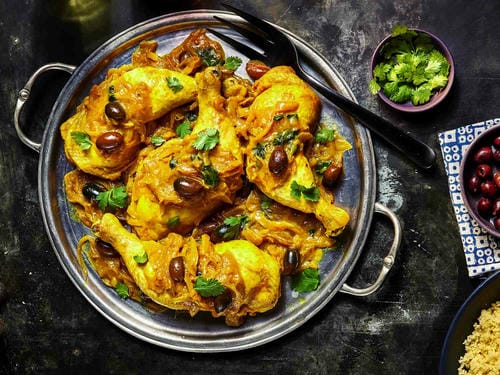
The word “tagine” refers both to the earthenware vessel with its distinctive conical lid and to the deeply aromatic stew cooked within it. The cooking vessel traces its origins to the Amazigh (Berber) people of North Africa, regarded as the region’s first inhabitants. According to some historians, nomadic Berber tribes used earthenware pots over portable fires, enabling meat and vegetables to be cooked slowly, conserving water and tenderising tougher cuts of meat. [1]
The design of the vessel is ingenious: the cone-shaped lid allows steam to rise, condense and then drip back into the dish, ensuring the contents remain moist and richly flavoured with very little added liquid. This method made sense in water-scarce environments.
(Image from Serious Eats, the copyright belongs to the original author)
Historically, the tagine became woven into Morocco’s identity as multiple cultural forces swept through the region: Arab expansion, Ottoman influences, Moorish refugees from Andalusia and French colonial presence each left culinary footprints. Spices like cumin, coriander, cinnamon and preserved lemon appear side by side with dried fruits, olives, nuts and meats, reflecting a fusion of Mediterranean, African and Arabic flavour traditions. [2]
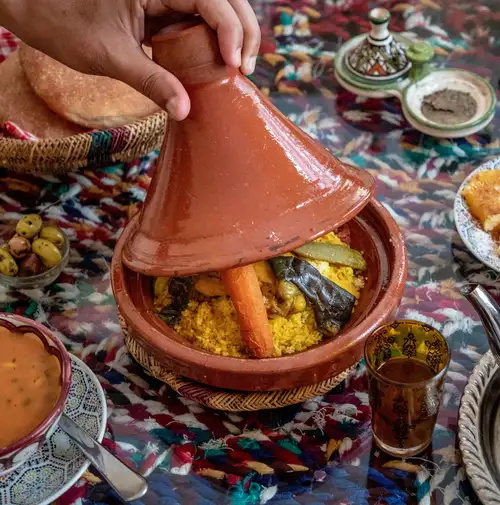
In Moroccan homes, the tagine is more than a cooking vessel—it is a vessel of hospitality. Families gather around it, the lid is lifted with care, flatbread is used to scoop the rich stew, and conversation flows as freely as the mint tea. It is a dish that invites sharing, connection and cultural immersion.
As you travel through Morocco—whether in the labyrinthine lanes of the medina in Marrakech, or the high-plateau villages of the Atlas Mountains—you’ll find tagines simmering over charcoal braziers, each pot carrying its regional twist. Knowing its origins and significance enriches the experience of preparing one yourself.
How to Make a Moroccan Tagine at Home?
Creating your own Moroccan tagine is both an act of culinary exploration and a way to bring a slice of Moroccan culture into your kitchen. Whether you use a traditional clay tagine pot or a heavy-bottomed Dutch oven, the principles remain the same: slow cooking, balancing sweet and savoury, layering spices, and embracing local ingredients.
(Image from Eater.com, the copyright belongs to the original author)
Choose Your Vessel
If you have a clay tagine pot, use it—season it if required, and cook gently to avoid cracking. If not, a heavy lidded casserole or Dutch oven will suffice. Either way, aim for low, steady heat and slow simmering. The goal is tender meat, vegetables that melt into the sauce, and aromas that draw everyone to the table.
Select the Main Ingredients
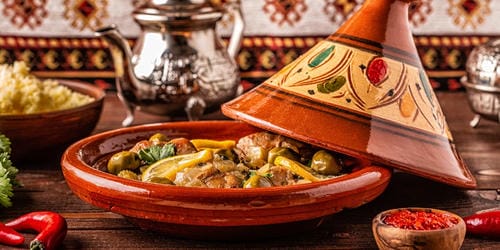
Classically, Moroccan tagines use chicken, lamb or a hearty vegetable base. For example, a chicken tagine might include bone-in chicken thighs, onions, garlic and a handful of olives and preserved lemons—a hallmark of Moroccan cuisine. If you prefer vegetarian, think root vegetables, chickpeas, dried apricots or prunes, and a tomato or olive-based sauce.
Build the Spice Palette
Spices are central to the tagine’s flavour. A typical blend might include ground cumin, coriander, ginger, cinnamon, turmeric and paprika. Some recipes call for ras el hanout—a Moroccan spice mix with dozens of components. Balance is key: the sweet-savoury interplay shows up when dried fruit meets savoury meat, when a preserved lemon glows with tang, and when nuts add crunch and texture.
Layer and Simmer
Begin by browning the meat lightly in olive oil, then remove it to build the base: onions, garlic, perhaps a splash of chicken broth or water, then the spice mix. Return the meat, add vegetables, olives or dried fruit as required, and cover tightly.
Slow cook—on a low flame, or in an oven at moderate temperature—for 1.5 to 3 hours, depending on your vessel and ingredients. The conical lid of a tagine pot works beautifully, but a covered pan will do the same job. Ensure there is enough moisture to prevent sticking, but not so much that you end up with a soup—the classic tagine is rich and stew-like, not watery.
Garnish and Serve
Just before serving, add the finishing touches: a handful of toasted almonds or pine nuts, fresh herbs like parsley or coriander, maybe a wedge of preserved lemon peel or olives for brine. In Morocco, the tagine is often served with fresh bread (khobz) used to scoop the stew rather than a fork and knife. Traditionally, the tagine is enjoyed communally around a low table, encouraging sharing and connection. You can recreate the atmosphere at home: set the table with a central dish, encourage guests to gather, dip into the pot with bread, and savour the shared moment.
Adaptations and Creativity
One of the greatest joys of tagine cooking is its flexibility. Use what you have: seasonal vegetables, local meat, or go vegetarian. If you don’t have preserved lemons, fresh lemon zest and juice will work. You might experiment: lamb with apricots and almonds, chicken with walnuts and quince paste, vegetarian versions with aubergine, chickpeas and artichokes. The key is taking the method and making it your own.
Serving and Atmosphere
Serve your tagine steaming and fragrant. Encourage guests (or yourself) to dive in while the aromas are at their peak. Pair with Moroccan mint tea afterwards, and perhaps some crisp salad (like zaalouk) and fresh bread. The experience is as much about mood and setting as it is about the flavours.
If you’ve travelled to Morocco, revisit the memory: the call of the medina, the colours of spices in the souk, the warmth of hospitality. If you haven’t yet, let each bite transport you there.
Immersing yourself in the world of Moroccan cooking through the tagine is a journey—one of tradition, flavour, culture and connection. Whether you’re bringing friends together at home or simply stirring a pot quietly by yourself, the ritual of creating and sharing a tagine invites you into something timeless, generous and deeply rooted in Moroccan heritage.
Post by Elena Torres
(All content on this blog represents the personal experiences and opinions of the author. While every effort is made to provide accurate and up-to-date information, travel conditions, laws, and regulations may change. Readers should verify details before making travel decisions.)
Sources:
[1]: https://epicureandculture.com/tajine
[2]: https://www.onceuponachef.com/recipes/moroccan-chicken-tagine.html
References:
https://www.britannica.com/topic/tagine-cooking-vessel