A Journey Through Albania’s Hidden Mountain Villages
November 16, 2025
Updated March 21, 2026
Estimated Reading Time: 10~12 min
When travellers dream of Albania, many picture sun-drenched beaches along the Adriatic, historic towns lined with ancient stone, or the lively capital of Tirana. Yet, tucked away beyond the coastline and away from the well-trodden tourist trails lies a different world: the mountain villages of Albania, remote and serene, where the pace of life slows and nature stitches itself into daily existence. These are places where stone houses cling to steep slopes, winter snow blankets roofs for months, and summers bring lush alpine meadows and calm valleys.
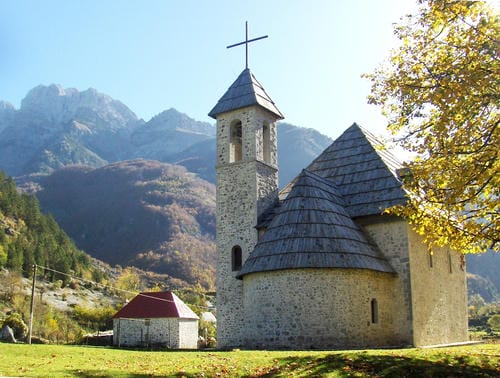
There is something magnetic about villages perched in the high ridges of the Albanian Alps (also known as Bjeshkët e Namuna, or “Accursed Mountains”)—a region defined by sharply rising peaks, deep river valleys, ancient forests and a culture of mountain living. The village of Valbonë, for example, is nestled at around 1,000 m above sea level within Valbonë Valley National Park and is surrounded by dense forest and cascading waterfalls. [1] Similarly, villages like Vermosh, the northernmost village in Albania, lie deep in alpine valleys and offer raw natural beauty and a strong sense of remoteness. [2]
Nature and Isolation
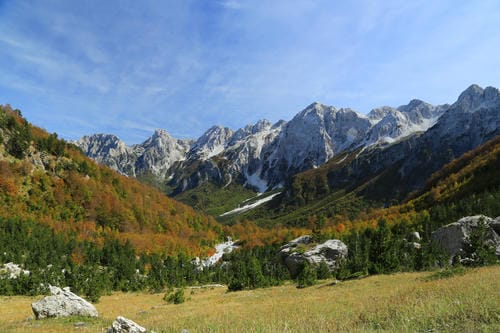
One of the primary draws of these villages is the landscape itself: towering limestone peaks, rivers that carve through deep gorges, and wilderness that is still lightly touched by modern tourism. For hikers, this means trails that begin from your village guesthouse door, silent forests where only the rustle of wildlife is heard, and skies unobstructed by urban light. For cultural travellers, the reward is something subtler: a chance to witness traditions, architecture, cuisine and ways of life that have evolved comparatively undisturbed. The village architecture in Valbonë, for instance, features traditional alpine-style stone towers and wooden board roofs that reflect centuries of adaptation to mountain living.
Real Life off the Grid
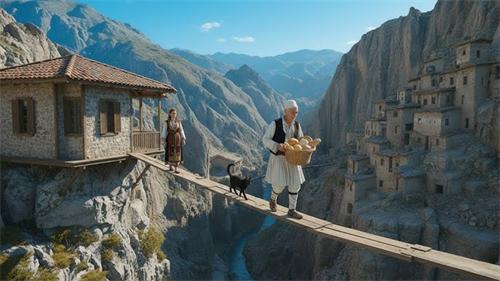
In these villages, the everyday rhythm differs from the more familiar urban or seaside holiday experience. You may find yourself sharing a meal with locals in a simple guesthouse, hearing stories of summer high-pasture life or watching the streams run clear beneath bridges built long ago. The house you stay in may have been there for generations, with walls built from local stone and a roof of rough timber. Roads may be narrow and winding, public transport limited, and winter access can be challenging. But for many travellers that is part of the charm. There is a purity in the simplicity. For example, resources describe these villages as “away from the crowds” and capturing an “untouched” sense of Albania’s soul.
Moreover, because tourism remains modest compared to many Alpine regions in Western Europe, your stay feels more personal, your interactions with locals more authentic.
Ease and Adventure in One
Though remoteness is part of the appeal, many of these mountain villages are accessible to the curious traveller. For example, the route with a ferry across Lake Koman into the northern valley region is considered a breathtaking “fjord-like” experience in the Albanian Alps. [3] The key is planning: staying in the right season (summer and early autumn are best for accessibility and weather), confirming transport ahead of time, and embracing a slower pace. Helpful guides mention that mountain villages are best visited in summer or early autumn for accessible roads and clear skies.
In short, these villages offer the perfect blend of sincere cultural immersion, dramatic natural beauty and a little adventure—without the need for extreme effort or mountaineering experience. The reward is simply being in a place where mountains feel alive, where valleys breathe and village life unfolds gently.
Planning Your Visit and Immersion in Albania’s Highlands
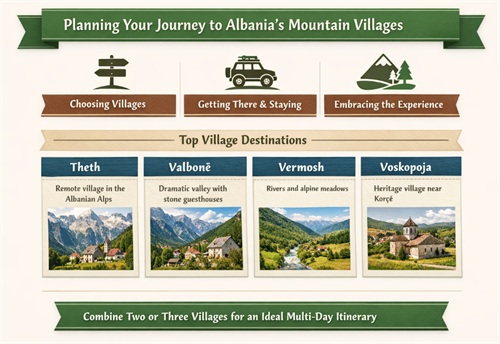
Having established why the mountain villages of Albania are worth visiting, let’s turn to how to do it well. Think of your journey in three phases: choosing villages, getting there & staying, and embracing the village experience. While there are many mountain villages across Albania, a few stand out for their accessibility, natural beauty and welcoming accommodation.
Getting There and Staying
Planning is key in mountainous Albania. Roads can be narrow, unsealed, and weather dependent. Some villages are accessible only via high-clearance 4×4 vehicles or by foot/horse track at certain times. But for many, public transport options exist (buses, minivans) combined with local transfers. Travel guides stress choosing the right season and allowing extra time for mobile signal issues or road conditions.
Guesthouses (often family-run) in these villages are usually simple but warm and comfortable. Expect traditional architecture—stone houses, tile or wooden roofs, fireplaces or wood stoves—and local cuisine matters. Staying just one night may not be enough to feel the atmosphere; two or three nights allow you to truly unwind and explore without rushing.
Summer (June through September) is the best season for good access, mild mountain weather, lush greenery and long daylight. Early autumn also offers fewer crowds and beautiful foliage. Winter visits are possible but challenging due to snow, limited access and closed roads.
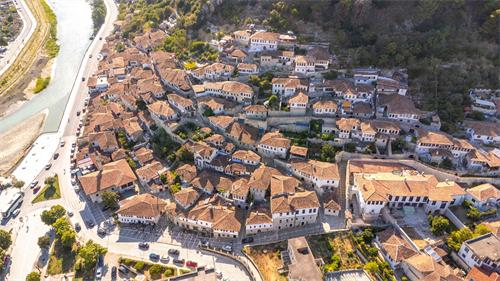
Experience the Village Experience
Hiking and connecting with nature are central to experiencing the countryside. You can use a village as a base to explore nearby meadows, waterfalls, and ridges, connecting with the natural landscape in ways you can't experience simply by staying in the village. At this slower pace, you'll have time to observe, listen, and reflect—to spot a flock of golden eagles, to notice wildflowers clustered where sheep once grazed, or to pause by a wooden bridge and watch the clear, cool stream flow.
The hospitality of these villages is deeply rooted in the land and its traditions. Accommodation is typically family-run guesthouses with stone rooms, serving local cuisine and warm hospitality. In places like Valbona, guesthouses are an integral part of the visitor experience, preserving their authentic architecture and atmosphere even as tourism flourishes.
Immersing yourself in the local culture is more than just a night's stay—it means understanding how local life unfolds around the seasons. In these mountain villages, summer means driving livestock to high-altitude pastures, while winter means deep snow and impassable roads. Local storytellers recount how their ancestors herded sheep on foot, the bustling summer markets, and how long winters could last six months or even longer. It is from these stories that you can understand how the terraced fields were built, the angle of the roofs, and why the kitchens are so warm.
Post by Isabella Moreno. A former airline operations manager and certified travel consultant, Isabella has spent over a decade exploring over 50 countries. Her insights into budget travel and luxury experiences stem from years of firsthand experience navigating international travel logistics.
Sources:
[1]: https://www.albaniatravel.guide/blog/7-villages-to-visit-in-albanian-alps
[2]: https://www.thealbaniainsider.com/2023/07/07/4-mountain-villages-to-visit-in-albania
[3]: https://adventurealbania.com/albanian-alps
References:
https://albaniasecrets.com/albanian-countryside
https://whattodoinalbania.com/2024/01/22/albanias-hidden-villages-to-discover