Nordic Solitude and Hidden Oceanscapes in the Faroe Islands
November 21, 2025
Key Takeaways:
-Where cliffs meet the sea, magic happens.
-Wild landscapes, endless skies, pure wonder.
-Quiet villages, dramatic views, total escape.
-Sheep, waterfalls, and windswept beauty await.
-Nature rules here, and it’s breathtaking.
Updated March 29, 2026
Estimated Reading Time: 12~14 min
Set in the remote North Atlantic between Scotland and Iceland, the Faroe Islands are a collection of 18 rugged and wind-swept islands that seem suspended between sea and sky. These islands belong to the Kingdom of Denmark, but possess a distinct character and culture all their own.
From the moment you arrive—perhaps via a dramatic descent into the tiny Vágar Airport amid jagged peaks and wavy ocean—you’ll understand that this is less about plush resorts and more about elemental contrasts: cliff-faced drops, shimmering fjords, turf-roofed cottages, and the kind of weather that seems to change hour by hour.
Nature That Feels Untouched
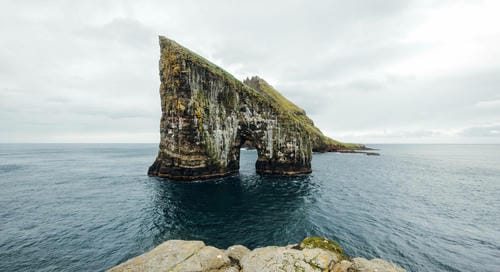
Exploring by car or ferry, you’ll soon encounter some of the islands’ finest spectacles. On the island of Vágar, for instance, the sea stacks of Drangarnir—one forming a dramatic arch rising out of the Atlantic—stand between the islet of Tindhólmur and Vágar. They are accessible only by boat or by views from the nearby village of Bøur, giving them an air of remoteness and mystery.
Then there are waterfalls like Fossá, which drops some 140 metres to the sea in two stages on northern Streymoy—a perfect symbol of the islands’ attitude toward grandeur without fanfare.
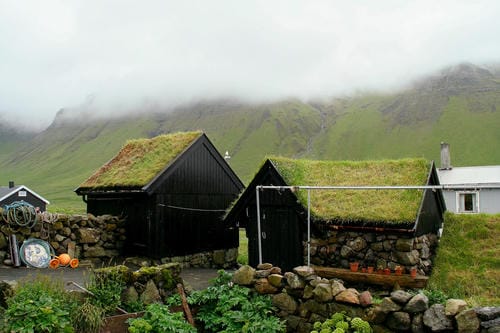
In villages like Gjógv on the island of Eysturoy you’ll find a natural harbour carved out of basalt cliffs, and cottages with sod roofs looking out to sea. Street lights are few and far between, the midnight sun lingers in summer, and the true feeling is of being somewhere between wilderness and homeland. [1]
One of the delights of the Faroes is how little tourism has transformed them—at least compared to major hotspots. For travellers seeking raw landscapes and solitude, this is gold. But it comes with a caveat: being prepared. The weather can be brutal—expect rain, wind, fog, shifting light—and you need to be flexible. The locals often joke: “If you don’t like the weather, wait five minutes.” [2]
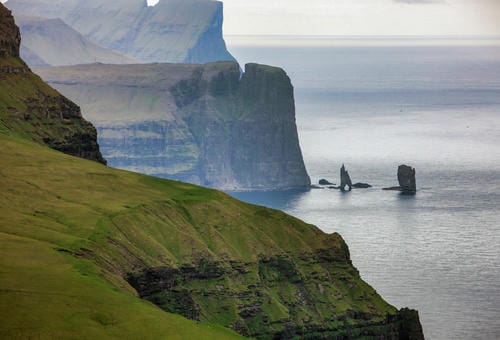
With the right mindset, the Faroe Islands reward in spades. One day you might drive through bright sunshine, hail, mist, and wind all in one trip. Every stop feels like a postcard come alive: turf-roof houses glowing in golden light, sheep grazing on emerald hills that drop into the sea, lighthouses perched at dizzying edges. Photography here feels effortless. It’s not about composing the shot—it’s about being humble in front of the view.
(Image from Trap Foroyar, the copyright belongs to the original author)
Dive a bit deeper and you’ll find that these islands don’t only belong to nature-lovers and photographers—they sustain a living culture. Sheep roam the hillsides, boats ferry travellers across channels, and the capital town of Tórshavn remains small and compact, a blend of modernity and tradition. [2]
Travel Practices, Practicalities & Cultural Rhythms
Because the Faroe Islands are remote and still relatively lightly toured, travel here is less about slick convenience and more about mindful presence. Begin with the basics: when to go, how to move around, what to expect and how to engage.
When to Visit – The months from June through August are generally the best bet: days are long, the weather is at its mildest, and routes to remote islands are open. But beware—“mild” in the Faroes still means temperatures of around 10-13 °C, with frequent rain and wind. Autumn and spring offer quieter experiences, fewer crowds and vivid light, but also shorter daylight and more uncertain conditions. Winter has its charm (think Northern Lights, snow-clad peaks) but is less reliable for transport and outdoor access.
Getting Around – A rental car is highly recommended if you want flexibility. Many of the tunnels linking islands are modern but can involve tolls. Public buses and ferries do exist, but some of the smaller islands or hiking trailheads are easier reached with your own vehicle. Book accommodation and car rentals in advance for summer.
What to Pack & Expect – Layers, waterproofs, solid hiking boots: non-negotiable. The landscape is slippery after rain, the wind gusts can surprise, and the light can change rapidly. While you may be drawn to the dramatic trails, always check local weather updates, be prepared to alter plans, and remember: the view is amazing even when you stay safe. [3]
Culture & Respect – The Faroese are proud of their land and traditions. Many villages are small, and the natural environment is fragile. Use marked trails, avoid disturbing sheep or nesting birds, and show courtesy when exploring. Card payments are standard; cash is rarely needed. Local cuisine includes fresh seafood, lamb, and for the adventurous, traditional Faroese fermented meat—part of what makes the place distinct.
Accommodation & Staying Longer – Because the islands are small and the number of lodging options limited, especially outside the capital, booking ahead is wise. Consider staying in small guesthouses or locally run cabins to keep the tone of your trip authentic. One blog described staying in a fisherman’s cabin on Fögar with sheep and waterfalls for neighbours.
What You’ll Do – Exploring villages like Tórshavn, visiting the 1300s era wooden farmhouses of Kirkjubøur, hiking to viewpoints like the cliff drop at Saksun or the famous viewpoint at the lighthouse on Kallur Lighthouse on Kalsoy—all of these are accessible and reward the visitor. Boat trips, birdwatching (especially puffins on Mykines in summer), coastal drives, and taking time simply to sit by the sea make up the agenda. The mode of travel is unhurried.
Why It Feels Different – Compared to more trodden northern destinations, the Faroes maintain a sense of edge: the weather is unpredictable, the terrain demanding, the pace slower and the visitors fewer. In that lies its appeal. One blogger describes it as a “hidden travel secret… just wondrous”. [4]
Tip for Your Travel Blog
When writing about the Faroe Islands, lean into mood and sensory detail—the roar of waves on basalt cliffs, the smell of sea mist, the way the sheep silently graze on green slopes that fall away to a dark sea. Use specificity: name villages, name hikes, consider how the season affects light and access. Your audience will appreciate the authenticity.
For a travel piece, you might focus on "A week of weather, wool, and wind in the Faroes" or "How to slow down on the Faroe Islands"—something that reflects how the destination isn’t about rapid sightseeing but about presence, adaptation and watching nature’s light show.
(Views expressed on this blog are solely those of the author and do not reflect the opinions of any organization, company, or third party mentioned.)
About the Author:
Fiona Chen holds a degree in Sustainable Tourism Management and has consulted for eco-lodges around the world. She writes guides that help travelers explore responsibly without compromising on adventure.
Sources:
[1]: https://www.intrepidtravel.com/us/europe/faroe-islands/best-time-visit-faroe-islands
[2]: https://www.livingthedreamrtw.com/faroe-islands-travel-guide
[3]: https://apnews.com/article/faroe-islands-travel-what-to-know-4547cce2255b1648c57d30a403e29523
[4]: https://guidetofaroeislands.fo/best-of-faroe-islands/top-blogs-about-the-faroe-islands
Adventure calls! Explore more articles and feed your wanderlust!