From Field to Foam: Embracing Terroir in a Slovenian Farmhouse Brew
November 18, 2025
Updated March 27, 2026'
Estimated Reading Time: 10~12 min
Nestled in the lush, undulating hills of the Savinja Valley in Slovenia — also known as the “Valley of Green Gold” — the concept of terroir takes on a wholly unexpected character when applied to craft beer. While many wine lovers appreciate how soil, climate and micro-environment shape the taste of grapes, here the same principles apply to hops, malt, yeast and the rustic ambience of a farmhouse brew site. In this setting you discover that the full sensory experience of taste and texture is inseparable from place. Slovenia may be better known for vines and pristine lakes, but the region has quietly cultivated a strong hop heritage, providing a perfect backdrop for a brewery born directly on a farm. [1]
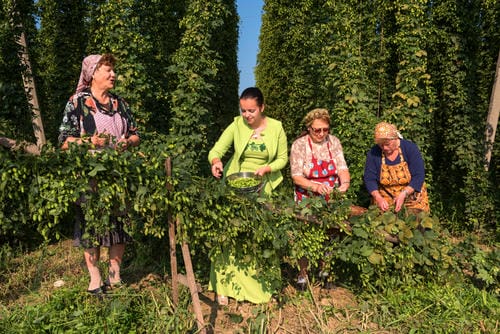
Walking through rows of trellised vines of hops, breathing the sweet-green scent on a warm late summer breeze, you begin to sense why some local brewmasters describe their beers as “field-aware.” The hops are grown literally metres from the stainless steel fermenters, dried in the same region’s barns, then mashed and boiled in-house. For the visitor, this means craft beer isn’t just a taste – it becomes a textured journey: the crisp snap of fresh hop flowers, the soft grainy body of the local malt, the subtle mineral finish imbued by glacial streams, and the sort of rustic imperfection brought by a farmhouse setting where the floor might creak and the wood beams still hold summer’s echoes. The notion of terroir — the land, the climate, the human touch — reconfigures itself around malt and foam rather than grapes and tannins.
What emerges from this valley is more than flavour: it is identity. Traditional hop varieties such as Aurora, Bobek, Celeia and newer aroma varieties like Styrian Wolf or Styrian Dragon grow here. When a farmhouse brewery uses hops grown within eyeshot, the flow — from field to kettle — is shortened and intimately local. That connection translates into texture — vibrant, fresh, slightly grainy, lightly herbal or citrus-tinged — and into aroma layers you might not associate with beer until you lean in and sniff. The taste delivers complexity: high-notes of lemongrass, mango or pear atop a backdrop of soft biscuit malt; a crisp bitterness followed by subtle sweetness and then an earthy finish.
As you sat within the farmhouse brewhouse — wood-paneled, with the fermenter bubbling softly, the smell of wort steaming up and the hop vines framing green light through the windows — you understand that this is not just brewing. It is crafting an edible map of landscape, heritage and sensory memory.
(Image from Taste Slovenia, the copyright belongs to the original author)
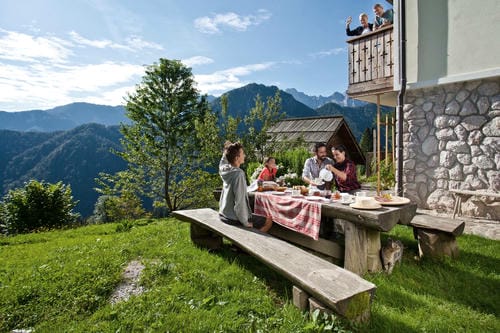
The farmhouse venue amplifies the experience. Instead of an anonymous industrial tasting room, you find yourself perched on a wooden bench, your glass placed on a reclaimed-barn table, the walls breathing the scent of summer’s harvest. You listen to the hiss of a kettle, the hum of a fan drying hop cones, and outside the window the vines sway in late afternoon light. You sip and you close your eyes and you are aware of the land, the air, the water. The loops of flavour in the glass echo the loops of vine and trellis outside. The barley malt wasn’t shipped in from afar — you walked past the crop the day before, noticing the glints of dew at dawn. This layered intimacy is rare in mass-produced beer.
Learning to Brew: Texture, Taste and Process in a Slovenian Farmhouse
When you sign up for a brewing-day workshop in such a Slovenian farmhouse, you are ushered into a world that blends rustic charm with serious craft. The process begins amid hop-scented air and straw-packed barns — far from anonymous industrial brewery environments. You’re taught first about the raw materials, and here is where terroir enters every step.
The instructor shows you newly harvested hop cones, still warm with summer sun, reminding you this farm may have grown them in the very field beside the barn. [1] You crush the malted barley and wheat, noticing its local provenance — the slight variation in colour, the whisper of stone-floor drying. You steep the mash, watch the sugars convert, then lift the copper kettle lid and inhale the sweet-caramel aroma. The farmhouse atmosphere—with timber beams overhead, ambient country softness underfoot—amplifies each sensation: the heat of the kettle, the hiss of steam, the swirl of hop additions.
Next comes the whirl of fermentation: you pitch a yeast strain selected for brightness and subtle esters, not the heavy industrial flavours of mass-market lagers. In this setting, the beer is allowed to mature gently. Texture becomes as important as taste: you’re encouraged to feel the body of the beer in the glass, to note how it moves, how light or round it sits on the tongue, whether it glides clean or lingers with malt-rich weight. Taste becomes a guided exploration: first the bright hop aroma, then the mid-palate malt sweetness, then the finish of minerality or herbal lightness that speaks of place. You understand how climate, soil and farming practice each have left their signature.

Beyond tasting, you join in the hands-on work: adding the hops mid-boil; raking the spent grain into wheelbarrows; cleaning fermenters by hand; and on slower moments walking out into the fields to see the hop bines reaching skyward. This immersive experience imbues you with a deeper appreciation—not just of beer, but of the chain of craft that links land, labour and leisure. [2]
When you finally pour your own small batch from the tap, you feel connected to every step: the field, the farmhouse, the brew-tank, the fermenter, the glass. And as you hold your pint and raise it to the late afternoon light, you see the hop-planted hills behind you, you hear the murmur of the farmhouse, you taste the fresh-cut hop blossom and you realise that this beer is not just brewed — it is grown, harvested, crafted, poured and consumed with the imprint of place.
Perhaps most appealing is that the farmhouse venue allows for reflection. As the late afternoon slips toward evening, you sit on a veranda with other participants, holding a just-poured pint and watching twilight fall over the hop-fields. The tasting instructions cease and you simply drink: you savour the crisp first sips, the soft mid-palate, the lingering aftertaste that is slightly floral, slightly grassy, slightly something you cannot quite name — but feel. And you realise it’s terroir. It is Slovenia, captured in a liquid form.
The farmhouse brew experience shifts your perception of craft-beer from merely a beverage to a journey: a journey that begins in the soil, travels through heat and fermentation, and ends in your glass with the flavour of a place, the texture of history, and the taste of fresh hops kissed by Alpine air. [3] Having completed the workshop, you leave not only with a certificate and a pint, but with memories infused by scent, sound, sight and sip: the rustle of hop-vines, the hiss of brewing steam, the tasting notes of your own creation.
Whether you are a seasoned beer-lover or a first-time curious traveller, this kind of farm-brew experience in Slovenia offers a rare convergence: rural serenity, hands-on craft, taste exploration, and immersion into terroir. It invites you to value beer not just as refreshment, but as moment, memory and place.
About Us
We are a collective of travel journalists, aviation professionals, and cultural guides who share a passion for exploring the world. Our professional expertise ensures every article is accurate, insightful, and actionable for travelers.
Sources:
[1]: https://craftbeernomads.com/craft-beer-in-slovenia-introduction
[2]: https://craftbeernomads.com/slovenia-green-gold-brewery-and-clef-brewing
References:
https://www.mdpi.com/2306-5710/9/4/86
https://www.blocal-travel.com/food/slovenian-craft-beer